Atlanta · Augusta · Savannah · Columbus
IT support, security and compliance for Georgia companies.
Remote help desk, security monitoring, compliance and vCIO for Georgia businesses and the people who work for them, from Atlanta to Macon.
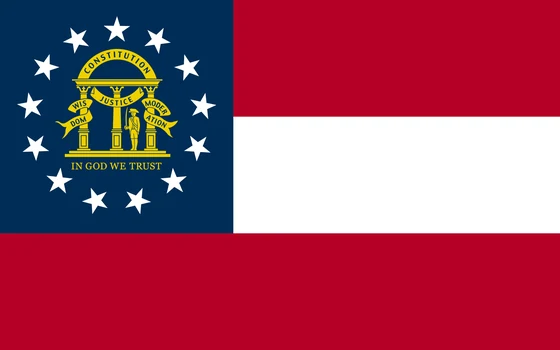
Georgia's economy
The industries that drive Georgia, and how we help them.
The Port of Savannah has the largest single-terminal container facility of its kind in North America, and Georgia's ports and related private operations support more than 605,000 jobs statewide.
How we help: Uptime for dispatch and warehouse systems, connectivity for remote yards and sites, and fast onboarding for distributed staff.
How we help →Georgia, known as 'Transaction Alley', is home to payment processors such as Fiserv/First Data, TSYS, FIS and Worldpay, and the state says about 70% of U.S. financial transactions run through systems operated by Georgia-based fintech companies.
How we help: SOC 2, security questionnaires, remote teams and board-level IT guidance for firms that hold client data.
Software & professional services →Food and fiber production and related industries contributed $100.4 billion of output and 370,400 jobs in 2024, led by broiler chickens at $6.1 billion (36% of farm gate value).
How we help: Connectivity for remote sites, and the office IT, security and backups behind the operation.
How we help →Hyundai Motor Group's $12.6 billion Metaplant America in Ellabell, near Savannah, opened in March 2025 with capacity for 300,000 vehicles a year (planned to reach 500,000) and is expected to employ 8,500 by 2031.
How we help: Office and plant-floor networks, careful OT and SCADA support, and backups for the systems that run production.
How we help →Georgia remains a major production hub with 280 productions in FY2026, though direct spending fell to about $2 billion, a 10-year low, down from a $4.4 billion peak in 2022.
How we help: Fast storage and secure sharing for large media files, and IT for production offices that open and close on a schedule.
How we help →Georgia rules
The Georgia laws that affect your IT.
A breach, a privacy request or an auditor's question lands differently in every state. Here is what Georgia asks of businesses that hold its residents' data.
Data-breach notification
- The law
- O.C.G.A. §§ 10-1-910 to 10-1-912
- Telling affected people
- "The notice shall be made in the most expedient time possible and without unreasonable delay" (subject to law enforcement needs and measures needed to determine the scope of the breach and restore system integrity)
- Regulators
- No Attorney General or regulator notice is required for private entities.
- Credit bureaus
- More than 10,000 Georgia residents at one time: notify all nationwide consumer reporting agencies without unreasonable delay of the timing, distribution and content of the notices.
- Encrypted data
- Encrypted data is generally exempt (a safe harbor), unless the key was also compromised.
Georgia's statute is written for information brokers and government agencies, and for businesses that maintain data on their behalf, which must tell the data owner within 24 hours. Whether it reaches other businesses is unsettled, so take legal advice before deciding a breach does not need notice.
Consumer privacy law
Georgia has no comprehensive consumer privacy law. The Georgia Consumer Privacy Protection Act (SB 111, 2025-2026 session) did not pass as a privacy bill. Its text was replaced, and the enacted SB 111 deals with rural hospitals.
Other Georgia rules worth knowing
Who: State and local government agencies (including counties, municipalities and school districts) and public, private or cooperative utilities that produce, transmit or distribute electricity, power, light, heat or gas
Report cyber attacks and similar incidents to the Director of the Georgia Emergency Management and Homeland Security Agency (GEMA/HS); utilities, and agencies that meet the duty through federal reporting, must notify "within two hours of making such report to the United States government."
SourceWho: Businesses that discard customer records containing personal information
Before discarding such a record, a business must shred it, erase the personal information, make the information unreadable, or take actions it reasonably believes will prevent unauthorized access to the information until the record is destroyed.
SourceCurrent as of November 2026. This is general information, not legal advice. Laws change, so confirm the details with counsel before relying on them. We help you put the controls in place and keep the evidence; we are not a law firm.
Supporting Georgia teams
Remote by design, wherever your people work.
Our standard hours, 8am to 6pm Central, are 9am to 7pm Eastern. Critical problems are covered nights and weekends.
EasternLaptops shipped ready to work, accounts set up on day one, and the same help desk whether someone is in Atlanta or working from home.
Help desk & managed ITMFA, managed endpoint protection and monitoring on every device, so a laptop on home Wi-Fi is held to the same standard as the office.
CybersecurityCustomers and staff in several states means several sets of rules. We map which apply and build one program that satisfies them.
SOC 2 · HIPAA · vCISOGeorgia questions we get asked
How quickly must a Georgia business notify people after a data breach?
Under O.C.G.A. §§ 10-1-910 to 10-1-912: "The notice shall be made in the most expedient time possible and without unreasonable delay" (subject to law enforcement needs and measures needed to determine the scope of the breach and restore system integrity). No Attorney General or regulator notice is required for private entities. Georgia's statute is written for information brokers and government agencies, and for businesses that maintain data on their behalf, which must tell the data owner within 24 hours. Whether it reaches other businesses is unsettled, so take legal advice before deciding a breach does not need notice.
Does Georgia have a consumer privacy law?
Georgia has no comprehensive consumer privacy law. The Georgia Consumer Privacy Protection Act (SB 111, 2025-2026 session) did not pass as a privacy bill. Its text was replaced, and the enacted SB 111 deals with rural hospitals. That does not make you exempt from other states' laws: if you serve customers elsewhere, their states' rules can still apply.
Can you support our employees who work remotely in Georgia?
Yes. Help desk, device management, security monitoring and compliance all run remotely, and many of our clients have staff spread across the country. Our standard hours, 8am to 6pm Central, are 9am to 7pm Eastern for your Georgia team, and critical problems are covered nights and weekends.
Do you come on site in Georgia?
Our on-site visits are in Texas. In Georgia, our work is remote, which covers most of what companies need. When something needs hands on hardware, we arrange local help and coordinate it for you.
Thirty minutes, and you will know where you stand.
Thirty minutes, no obligation. Tell us about your Georgia team and we will tell you what we would do and what the ceiling would be.